
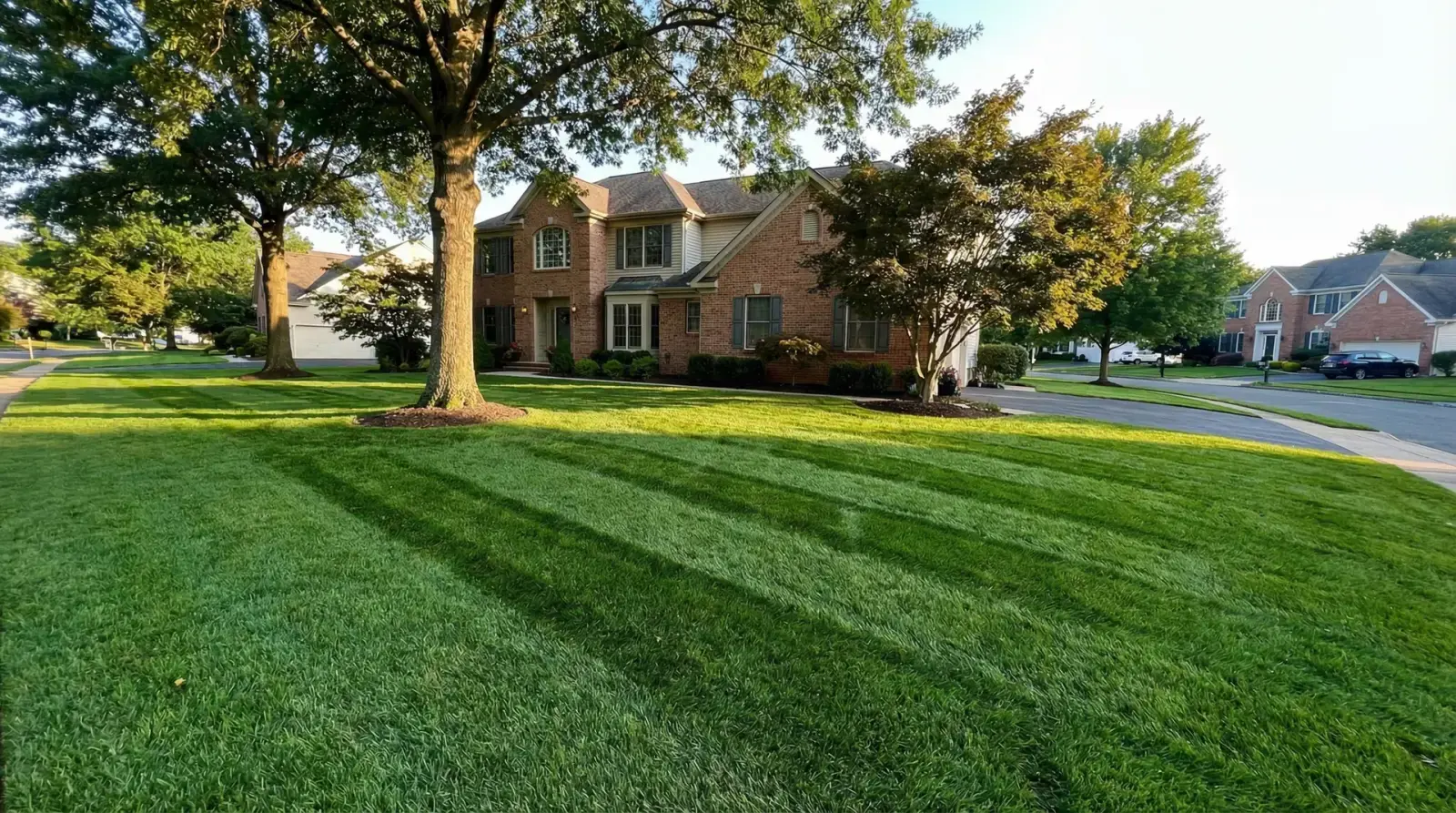
Short answer: water early in the morning, ideally finishing by about 6am. The air is cool and calm, so the water soaks into the soil instead of blowing away or evaporating, and the grass dries off as the sun comes up. Avoid watering at night.
That's the rule for every lawn we take care of in Ocean County, from Jackson to Long Beach Island. How long and how often depends on the season and whether the lawn is established or new.
How we judged "best"
- How much water actually reaches the roots (not lost to wind or sun)
- How long the grass stays wet (long wet nights invite lawn disease)
- How it fits sandy shore soil, which drains fast
- How easy it is to stick to, with or without a sprinkler system
The options, compared
Early morning (best). Calm air, low evaporation, and the blades dry once the sun is up. On sandy soil it also refills the root zone right before the hottest part of the day.
Midday. You lose more to evaporation and wind, especially near the bay and ocean. A short midday cycle is useful for new sod in warm weather, when the top layer dries fast, but it isn't the main watering for an established lawn.
Late afternoon. Better than midday, but the lawn may stay damp into the evening.
Night. The water soaks in, but the grass stays wet for hours. That's the setup lawn diseases like. We don't recommend it.
How long and how often: established lawns
As a starting point, an established lawn here wants about an inch of water a week, counting rain. In practice, for our customers' tall fescue lawns:
| Season | How often | About how long per zone |
|---|---|---|
| Spring | 3 times a week | 20-30 minutes, less after rain |
| Summer | 3 times a week; 4-5 days a week in a drought or a stretch of 90°F+ days | About 45 minutes |
| Fall | 3 times a week | About 20 minutes |
Skip a cycle after a good soaking rain (about half an inch or more). Sandy yards sit at the top of these ranges; yards that hold water or puddle sit at the bottom. Keep watering in fall until the sprinklers are winterized. The roots keep growing through the cool months.
How long and how often: new sod
New sod is different. It has no deep roots yet, so it needs short, frequent watering until it knits into the soil:
- Days 1-10: 2 times a day in spring and fall, 3 times a day in summer, about 15-20 minutes each. Start with the early morning cycle.
- Day 11 until the first cut: 1-2 times a day, about 20 minutes.
- Check it: lift a corner. The soil underneath should be damp, not muddy. If it squelches or water stands, ease off.
Full details are in our week-by-week new sod watering guide.
Signs you're watering too much or too little
Too little:
- Footprints stay pressed into the grass instead of springing back.
- The lawn turns a dull, bluish-gray before it browns.
- Edges, seams and strips along the driveway go brown first.
Too much:
- The ground squelches when you walk on it, or water stands after a cycle.
- Mushrooms or a slimy feel at the base of the grass.
- Shallow roots: the lawn wilts fast the moment you skip a day.
If you see the second list, cut back the minutes or skip a day. If you see the first, add time to the early morning cycle before adding extra cycles.
What's different in Ocean County
- Sand drains fast. Water goes down quickly, so regular watering matters more than one big soak.
- Wind near the water. On the barrier island and along the bay, early morning is often the only calm part of the day.
- Summer heat. Seams, edges and strips next to driveways and walks dry out first. Check those.
- Spring and fall rain. Real rain does part of the job. Skip cycles when it does.
The easiest way to get it right
A sprinkler system with a smart Wi-Fi controller handles all of this on its own: early morning runs, a skip after rain, and seasonal changes from your phone. We install Toro systems with a Hunter Hydrawise controller, with a 2-year parts and labor warranty. Compare the two in smart sprinkler controller vs regular timer, or read about sprinkler systems vs hand watering.
Frequently asked questions
What time should I water my lawn in the summer? Early morning, finishing around 6am if you can. In a heat wave, new sod may need an extra short cycle in the afternoon; established lawns should get longer morning runs instead.
Is it bad to water grass at night? It isn't harmful once, but making it a habit keeps the grass wet for hours and invites disease. Morning is better.
How do I know if I'm watering enough? The soil a few inches down should be moist a few hours after watering. If footprints stay pressed in the grass, it needs water.
Should I water after it rains? Skip the next cycle after about half an inch of rain or more. A smart controller can do that for you.
How often should I water new sod? Two or three short cycles a day for the first 10 days depending on the season, then once or twice a day until the first cut.
When can I stop watering in the fall? Keep watering on a reduced schedule until your sprinklers are winterized. The roots keep growing through the cool months.
Want a lawn that waters itself?
Call or text 848-301-1569 or get a free quote online for a new lawn, a sprinkler system, or both. See sprinkler system installation.