
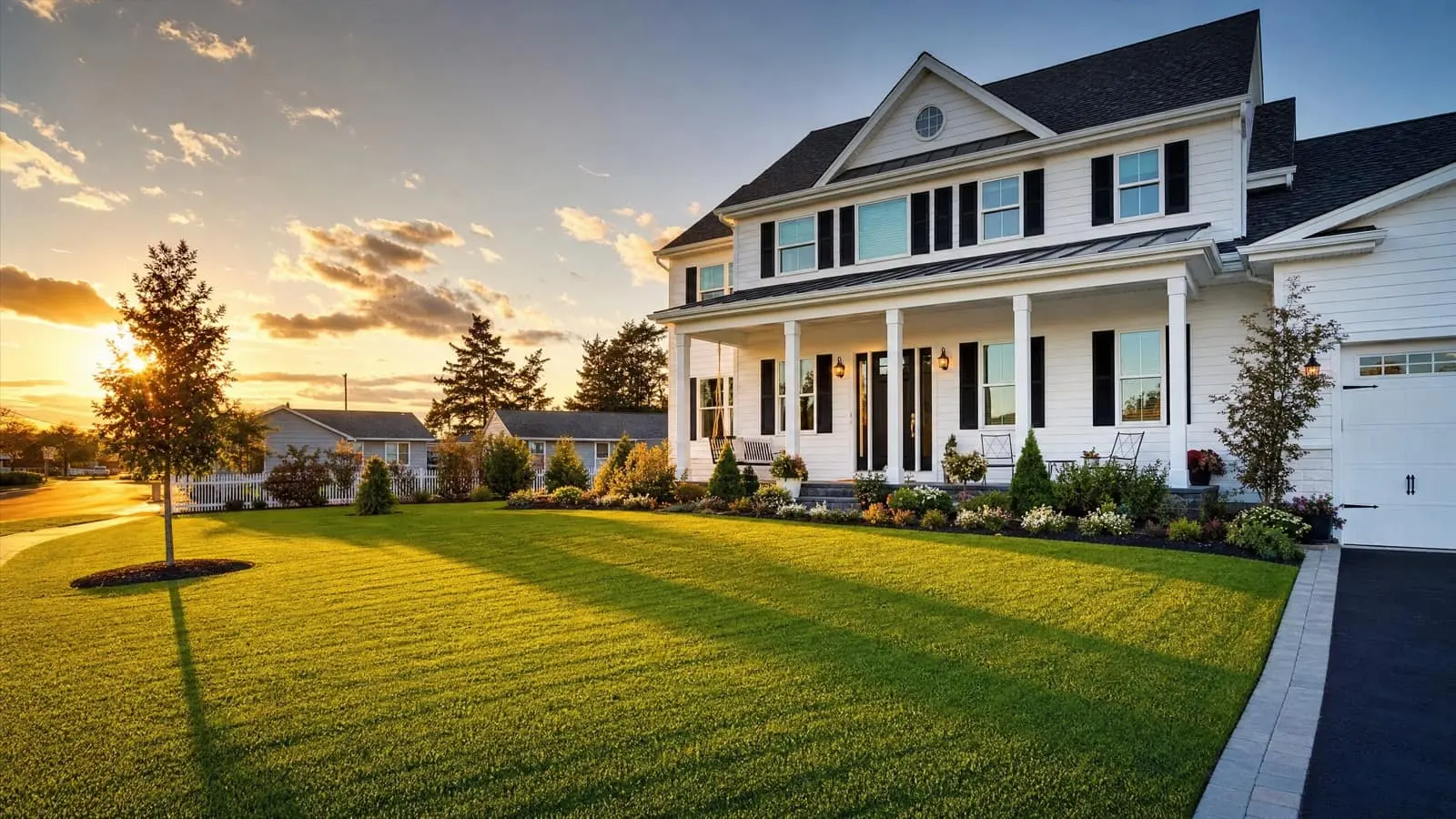
Short answer: for most Ocean County homes, the lowest-maintenance real lawn is a tall fescue blend on properly prepared soil, watered by an in-ground sprinkler system with a smart controller. Tall fescue roots deep and handles shore heat; good soil means fewer problems; and the sprinklers take the daily work off your plate.
"Low maintenance" means different things to different people. Here's how we judged the options and what we'd pick for a typical yard in Toms River, Brick, Jackson or Lacey.
How we judged
- Watering effort, especially in July and August
- Mowing and feeding it needs to look good
- How it handles sandy soil, heat, kids and dogs
- How often it needs repair, like bare spots, weeds or reseeding
The options
1. Tall fescue sod on good soil, with sprinklers (our pick)
- Best for: families who want a real, green, usable lawn without daily chores.
- Pros: deep roots, heat-tough, stays green, handles foot traffic; dense from day one so weeds have less room; the sprinklers handle watering.
- Cons: it's still a lawn: mowing, a feeding program, and fall aeration and seeding once it's established.
2. Tall fescue sod, hand-watered
- Best for: smaller yards where someone is home and doesn't mind the hose.
- Pros: same grass, lower upfront cost.
- Cons: watering is on you, and in shore summers that's often 3 days a week or more. Edges and seams dry first.
3. Seeding an existing lawn
- Best for: a lawn that's already mostly healthy and just thin.
- Pros: cheaper per year.
- Cons: it thickens what's there; it won't fix a lawn that's mostly weeds or bare sand, and it needs repeating.
4. Artificial turf
- Best for: small spaces, dog runs, or spots where grass won't grow.
- Pros: no mowing, no watering for growth.
- Cons: gets hot in full sun, needs rinsing and brushing, and isn't a living lawn. See sod vs artificial turf.
5. Stone or beds instead of grass
- Best for: deep shade or tiny side yards where no grass will thrive.
- Pros: no mowing.
- Cons: weeds still come through, and stone gets hot.
What makes a lawn low-maintenance here
Soil comes first. Most Ocean County yards are sand that holds little water or food. A lawn on bare sand is a high-maintenance lawn no matter what grass you pick. We remove the old lawn, grade, and add composted topsoil aged a year (never fill dirt), plus lime and starter fertilizer, before any sod goes down.
Then the grass. We grow one grass on purpose: a tall fescue blend, grown 9 months on our own farm and cut the morning it goes down. It's the right grass for sandy Jersey Shore soil.
Then the water. An in-ground system with a smart controller waters early in the morning, skips after rain, and changes with the season from your phone. We install Toro systems with a Hunter Hydrawise Wi-Fi controller, with a 2-year parts and labor warranty. See when to water.
Mistakes that turn a lawn into a chore
- Laying sod or seed straight onto sand. No soil, no water-holding, constant problems.
- Burying old grass instead of removing it. Tilling the old lawn in mixes its weeds back into the new one. We cut it out and haul it away.
- Using fill dirt. It's trucked in from unknown places and grass roots poorly into it. We use clean topsoil to build up grade and composted topsoil for the finish.
- Watering at night. It keeps the grass wet for hours and invites disease.
- Scalping it. Mowing too short stresses tall fescue in summer.
Get those right at the start and the lawn mostly takes care of itself.
Your low-maintenance routine
- Mow high, around 3 inches or a bit more, so the grass shades its own roots.
- Water early in the morning, about 3 times a week once established. Let the controller do it.
- Feed it on a seasonal program. After our aftercare, many of our customers use a treatment program; ask us and we'll point you to the partner we refer.
- Aerate and slit seed each fall, starting the fall after its first year (not in the first 12 months).
Frequently asked questions
What is the lowest-maintenance grass in New Jersey? For sunny, sandy Ocean County yards, a tall fescue blend. It roots deep and holds up to heat better than most cool-season options.
Is artificial turf lower maintenance than grass? No mowing or watering, but it needs cleaning and gets hot in summer sun. For most families a well-built real lawn is the better everyday yard.
Do I need a sprinkler system for a low-maintenance lawn? You don't have to have one, but it removes the biggest chore. Hand-watering a shore lawn in summer is a few times a week.
How often do I have to mow tall fescue? About once a week in the growing season, less in the heat of summer and late fall. Mowing high keeps it healthier.
Can I make my current lawn low-maintenance without replacing it? If it's mostly healthy, yes: better watering, mowing high, and fall seeding. If it's mostly weeds or bare sand, replacing it is usually less work long-term.
Get a free quote
Want a lawn that mostly takes care of itself? Call or text 848-301-1569 or get a free quote online. See sod installation and sprinkler systems.