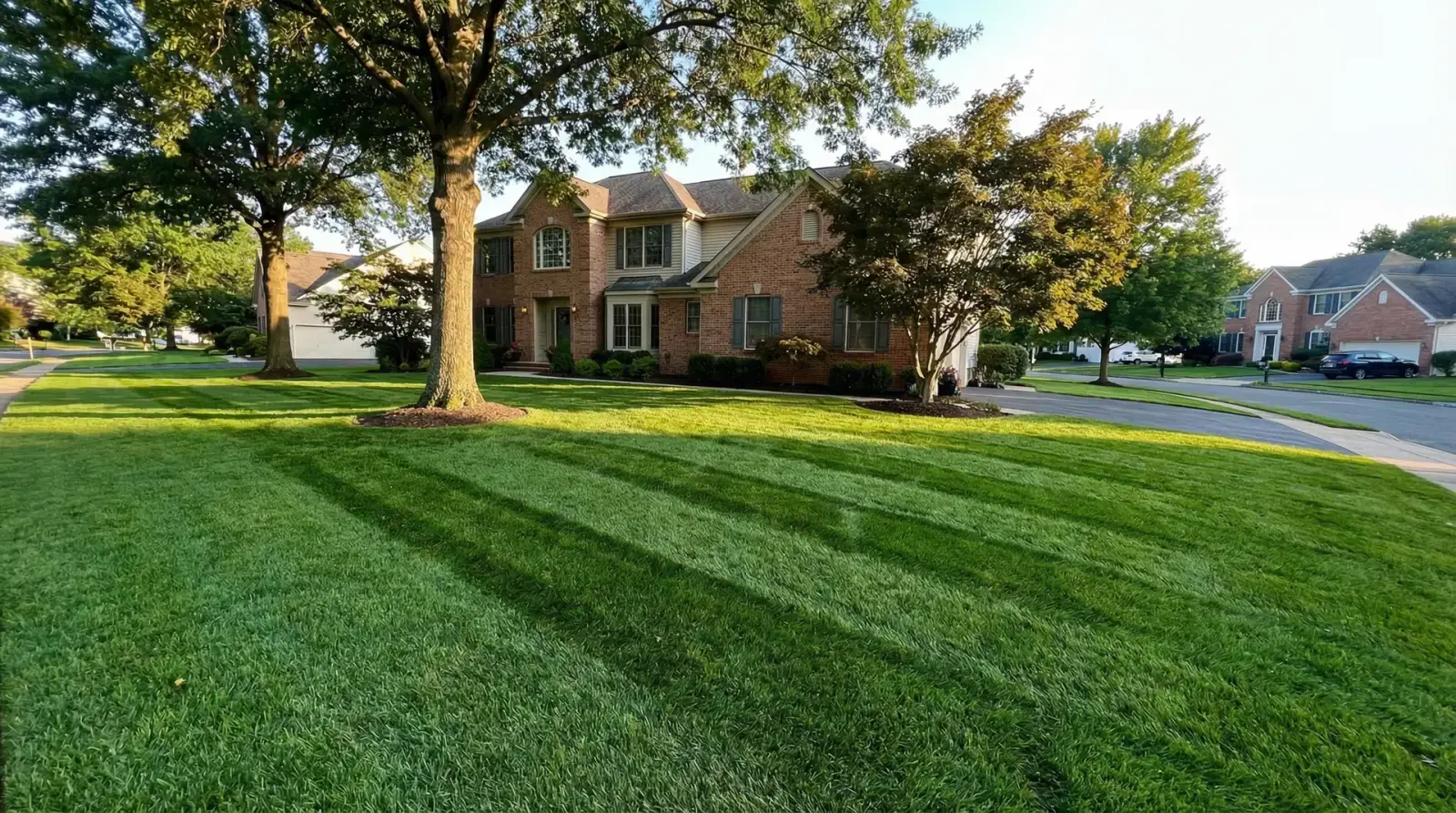
If you're comparing sod for a New Jersey lawn, it almost always comes down to these two grasses. Here's the honest comparison from a crew that installs one of them every working day — and holds it to the Sod Squad Standard: grown at least 9 months before a single roll is cut.
The short answer
For most of the Jersey Shore, tall fescue wins. Sandy, fast-draining soil and hot, dry summers favor tall fescue's deep roots. Kentucky bluegrass looks spectacular in spring, but it needs more water, more nitrogen, and more forgiveness than shore conditions offer.
That's why the sod we install is a Tall Fescue Blue blend — tall fescue's toughness with a percentage of Kentucky bluegrass mixed in for color and knit. You get the best trait of each without betting the lawn on the thirstier grass.
Head to head
| Tall Fescue | Kentucky Bluegrass | |
|---|---|---|
| Root depth | 4–6 inches — rides out dry spells | 2–3 inches — needs steady water |
| Sandy shore soil | Excellent | Struggles without heavy amendment |
| Summer heat | Very good | Fair — browns out in drought |
| Color | Rich medium-dark green | Deep blue-green, the classic look |
| Self-repair | Limited — bunching grass | Excellent — spreads by rhizomes |
| Water needs | Moderate | High |
| Fertilizer needs | Moderate | High |
| Shade tolerance | Good | Fair |
Where bluegrass still earns its spot
Bluegrass spreads by underground rhizomes, so it knits sod together tightly and repairs small damage on its own — which is exactly why it's blended into premium tall fescue sod rather than skipped entirely. A blend that's mostly fescue with some bluegrass gives you fescue's roots and drought tolerance, plus bluegrass's color and self-knitting seams.
Pure bluegrass lawns can absolutely work in NJ — inland, on loam soil, with an irrigation system and an owner committed to feeding it. On sandy coastal soil without irrigation, it's the grass we get called to replace.
What we install
Every lawn we install is grown to the Sod Squad Standard: a tall fescue blend grown for 9 months before harvest — deep roots already developed, cut fresh the morning of your install in big net-free rolls. It's the grass that was built for Ocean and Monmouth County: salt-air tolerant, heat-tough, and happy in the sandy soil that kills thirstier lawns.
Read the full grass comparison in Tall Fescue Blue vs other grasses, or see what a full installation costs — $2.85/sqft with soil prep and 30 days of aftercare included.
The bottom line
- Sandy soil, shore towns, no irrigation: tall fescue, no contest.
- Inland loam with irrigation: either works; fescue is still lower-maintenance.
- Want both? That's literally what a Tall Fescue Blue blend is — and it's what we install.
Text your address to 848-301-1569 and we'll tell you what will actually thrive on your soil — the answer costs nothing.