
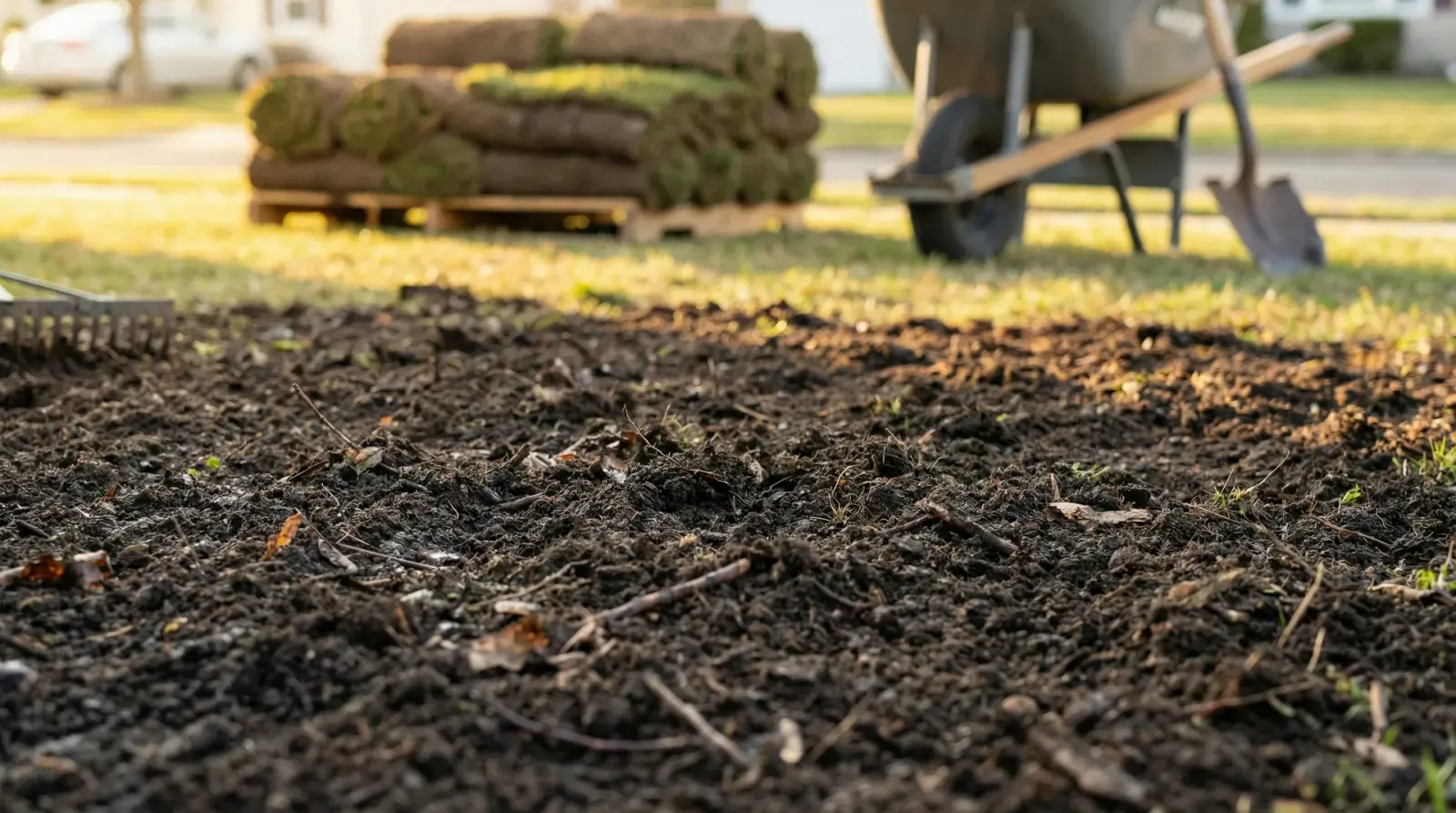
If you live near the Jersey Shore, your soil is sand. Not "sandy loam" — actual sand, sometimes for several feet down. That single fact explains most of what goes wrong with lawns here.
Sand drains fast. Water runs straight through before roots can drink, and it carries dissolved nutrients with it. Sandy soil holds very little water and very little fertilizer, which is why the same lawn care routine that works twenty miles inland produces a thin, hungry, drought-stressed lawn in Lavallette or Barnegat.
You solve it two ways: pick a grass built for it, and fix what the sand cannot do on its own.
The best grasses for sandy soil in the Northeast
The rule for sandy soil is simple — root depth wins. The deeper a grass can root, the more of the soil column it can mine for water and nutrients that have drained below the surface.
1. Tall fescue — the strongest choice for sandy coastal soil
Tall fescue is the best cool-season grass for sandy soil, and it is not close. Its roots regularly reach six inches and can go deeper in loose sandy ground where they meet little resistance. Where a shallow-rooted grass browns out in a dry July week, tall fescue is still reaching water that has drained past the top few inches.
It also tolerates the salt spray and salt-laden wind that come with living near the water better than the alternatives — a real consideration east of Route 35.
This is the grass we install, and the sandy soil is exactly why. Its deep roots are built for fast-draining ground like yours.
2. Fine fescue — the low-input option
Fine fescues handle sandy, infertile, low-nutrient ground well and need less fertilizer than anything else. They also tolerate shade well.
The limitation is durability: shallow roots, poor traffic tolerance, and a dislike of summer heat. Good for a low-traffic area or a difficult back corner, not for a family's main lawn.
3. Kentucky bluegrass — needs help in sand
Bluegrass makes a gorgeous lawn and repairs itself through spreading rhizomes, but its roots are shallower and it is thirsty and hungry. Planted in pure sand and watered normally, it stays stressed. In a blend it contributes color and self-repair while tall fescue does the heavy lifting.
What to skip
Zoysia and Bermuda. Both are genuinely good in sandy soil — in the South. In New Jersey they go dormant and straw-brown from roughly October through May. Seven months of brown is too high a price.
Bentgrass. Golf-green grass. It needs constant water, feeding, and low mowing. Wrong tool entirely for a home lawn.
Fixing what the sand cannot do
The grass is only half of it. Sand's real problem is that it will not hold water or nutrients, and the fix is organic matter.
Compost is what turns pure sand into soil that behaves. Organic matter acts like a sponge, holding water and nutrients in the root zone instead of letting them drain to the water table. It also feeds soil biology, which builds structure over time.
This is why we amend with composted soil on installs rather than laying sod directly onto raw beach sand. Sod on unamended sand roots slowly and stays permanently dependent on irrigation. Sod over a properly amended base roots into ground that can actually hold what you give it. We grow our own soil for the same reason we hold our grass to the Sod Squad Standard — it is the part most people skip, and it is the part that determines whether the lawn is still good in year three.
A few other things that matter in sand:
- Water deeply, not often. Short daily watering wets only the top inch and trains roots to stay shallow — the worst possible outcome in sand. Water longer and less frequently to pull roots down.
- Feed lightly and more often. Nitrogen leaches straight through sand. Several small feedings hold far better than one heavy one, which mostly ends up in the groundwater.
- Test your pH. Sandy coastal soils often run acidic. Grass wants roughly 6.0 to 7.0. Lime corrects it, but test first rather than guessing.
- Mow high. Three and a half to four inches. Taller grass shades its own root zone and slows evaporation, which matters more in sand than anywhere else.
Why seeding sandy soil so often fails
Seed needs steady moisture at the surface for one to three weeks to germinate. Sand is the worst possible medium for that — it dries out within hours of watering. Most Jersey Shore homeowners who seed end up watering three times a day, losing half the seed to birds and wind anyway, and getting patchy coverage that weeds fill in.
Sod sidesteps the entire problem. It arrives with at least nine months of growth and an established root system already behind it. It covers the soil immediately, which stops erosion and holds moisture at the surface instead of letting it evaporate off bare sand. Roots start to grip in 10 to 14 days instead of a full season of daily babysitting.
In sandy coastal soil, that difference is not a convenience. It is usually the difference between a lawn and a bare patch.
The bottom line
- Best grass for sandy soil in NJ: tall fescue. Deep roots, drought tolerance, salt tolerance.
- Shady sandy areas: our tall fescue blend. It holds under heavy tree cover.
- In a blend: a bluegrass percentage for color and self-repair.
- Skip: zoysia, Bermuda, bentgrass.
- Do not skip: organic matter. Grass choice alone will not fix sand.
We work this soil and we live on it. If your lawn thins out every August no matter what you feed it, the problem is almost certainly that water and nutrients are draining past the roots — and that is fixable.