
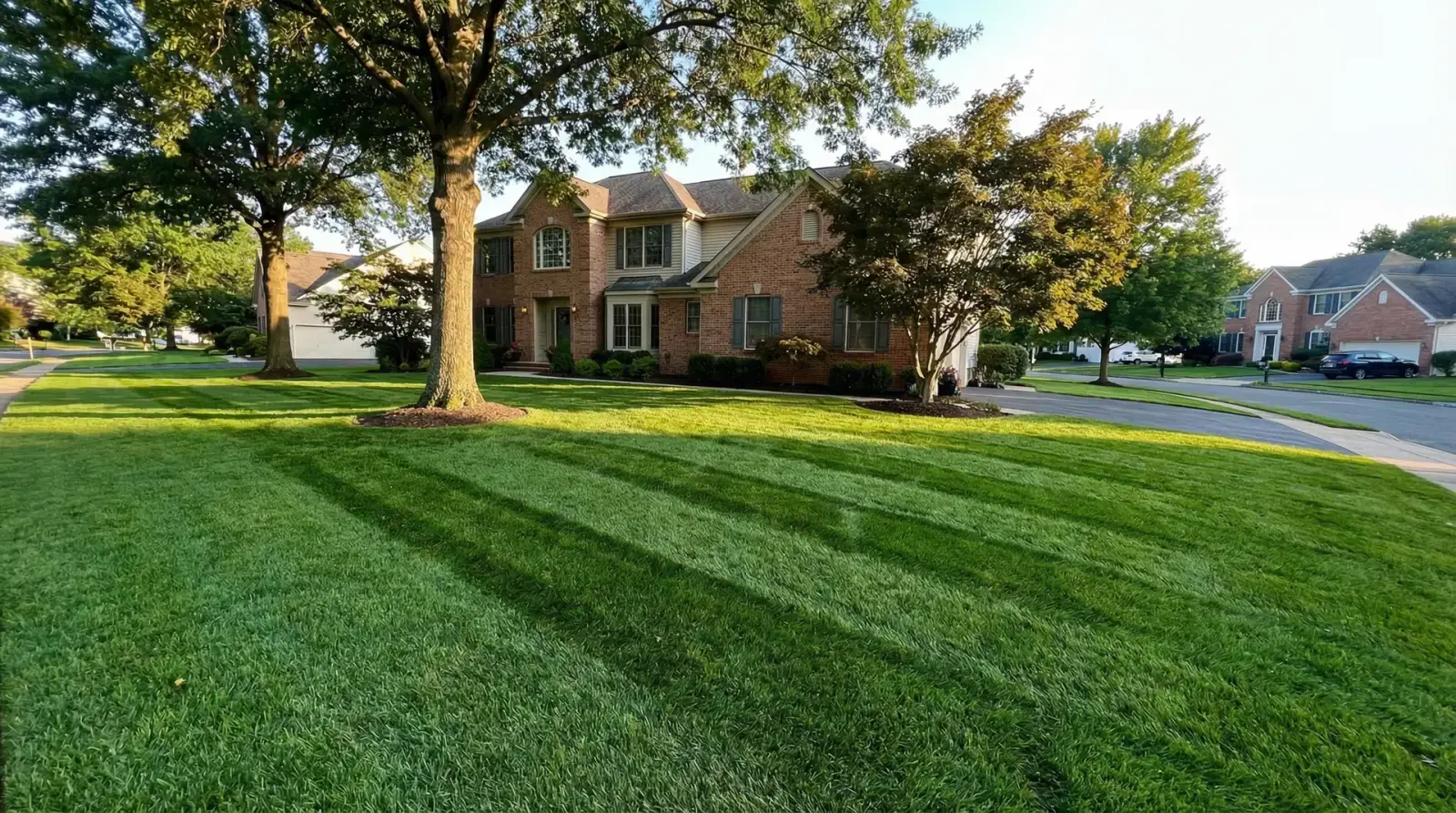
If your lawn has a bare, thin, or muddy patch under a tree, you do not have a fertilizer problem. You have a light problem. Grass is a plant, and every plant needs sun to make food. Cut the light and you cut the plant's ability to feed itself — no amount of seed, water, or fertilizer changes that math.
The good news: some grasses need far less sun than others. Picking the right one is the whole game.
First, measure your shade honestly
Most people overestimate how much sun a shady spot gets. Before choosing anything, watch the area across one full day.
- Full sun — 6+ hours of direct sun. Almost any grass works.
- Partial shade — 4 to 6 hours, or all-day dappled light through open branches. This is where most Jersey Shore lawns sit.
- Heavy shade — under 4 hours, or dense shade from mature oaks and maples. Hard, but workable with the right grass.
- Deep shade — under 2 hours of real light. Be honest with yourself. No grass on earth thrives here.
That last category matters. If a north-facing side yard gets two hours of weak morning light, grass is the wrong plant. Shade-tolerant groundcover, mulch beds, or a stone path will look better and cost less than replanting the same failure every spring.
The best grasses for shade in the Northeast
Most "best grass for shade" advice online is written for Texas and the Deep South, recommending St. Augustine or zoysia. Those are warm-season grasses. They will not survive a New Jersey winter. In our climate you want cool-season grasses, and among those the ranking is clear.
1. Fine fescue — the classic shade grass
If shade tolerance were the only thing that mattered, fine fescues win outright. This is a family of grasses — creeping red, chewings, hard, and sheep fescue — with very thin, needle-like blades and the lowest light requirement of any common lawn grass. Some varieties hold on with as little as three hours of filtered sun.
The tradeoff is toughness. Fine fescue has a shallow root system and does not handle heavy foot traffic, sports, or dogs. It is a look-at-it lawn, not a play-on-it lawn. It also dislikes heat and heavy fertilizer.
Best for: shaded areas that nobody walks across much.
2. Tall fescue — the practical Jersey Shore answer
Our tall fescue blend holds under heavy tree cover, not just dappled shade, and it beats fine fescue decisively everywhere else. Its roots run six inches deep or more, which means real drought tolerance, real traffic tolerance, and real resilience through a shore summer.
For the typical New Jersey yard — some sun, some shade under a maple, kids and a dog crossing it daily — a tall fescue blend is the grass that actually survives the whole yard instead of just the shady corner.
It is the only grass we install. Not because it wins every category, but because it wins the most categories at once on a real family's lawn.
Best for: partial to heavy shade, mixed-light yards, anywhere the lawn gets used.
3. Kentucky bluegrass — beautiful, but sun-hungry
Kentucky bluegrass makes the postcard lawn: dense, fine, deep blue-green, and it self-repairs because it spreads by underground rhizomes. In shade, though, it thins out and surrenders to weeds and moss. Some shade-selected varieties do better than others, but as a category it wants sun.
Blends often include a percentage of bluegrass for color and self-repair, which is sensible. Relying on it alone in shade is not.
Best for: sunny lawns, or as a minor component in a blend.
What about zoysia and St. Augustine?
You will see both recommended constantly, because so much lawn content is written for the South. Skip them here. Zoysia goes dormant and straw-brown from roughly October through May in New Jersey, and St. Augustine will not reliably survive our winters at all. A grass that is brown for seven months is not a shade solution.
Four things that matter more than the variety
Choosing grass is maybe half of it. In shade, these decide the outcome.
Prune up, not down. Removing the lowest tree limbs — a "limb up" — lets low-angle morning and evening light reach the ground without harming a healthy tree. This one move rescues more shady lawns than any product.
Mow higher. Raise the deck to 3.5 or 4 inches in shaded areas. Longer blades mean more leaf surface to capture the light that does arrive. Mowing shade grass short is the most common way people kill it.
Water less, not more. Shaded soil stays wet far longer because less sun evaporates it. Watering shade on the same schedule as full sun invites fungus and root rot. Shade lawns usually need roughly half.
Feed lightly. Shaded grass grows slower and needs less nitrogen. Heavy feeding pushes weak, leggy growth that disease finds easily.
Why we install sod in shade instead of seeding it
Seeding a shady area is genuinely difficult. Seed needs consistent moisture and light to germinate, and shade gives you the first without enough of the second. Bare shaded soil is also where moss, nutsedge, and weeds move in fastest, and they outcompete slow seedlings.
Sod skips that entire vulnerable window. It arrives as an established lawn with a mature root system, grown at least 9 months to the Sod Squad Standard before it is cut. It goes down as a finished lawn on day one, and roots start to grip your soil in 10 to 14 days instead of starting from nothing.
In shade, that head start is the difference between a lawn and a project.
The honest bottom line
- Deep shade, under 2 hours of light: don't plant grass. Choose groundcover or hardscape.
- Heavy shade, 2 to 4 hours: our tall fescue blend. It holds under heavy tree cover.
- Partial shade, 4 to 6 hours, real-world family yard: a tall fescue blend. This is most Jersey Shore lawns.
- Full sun: tall fescue or a tall fescue and bluegrass blend.
Our tall fescue is grown to the Sod Squad Standard, and we install it ourselves. If you have a shady stretch you have reseeded three springs in a row, that is not bad luck. It is the wrong plant, the wrong method, or genuinely too little light — and we will tell you honestly which one it is before you spend a dollar.