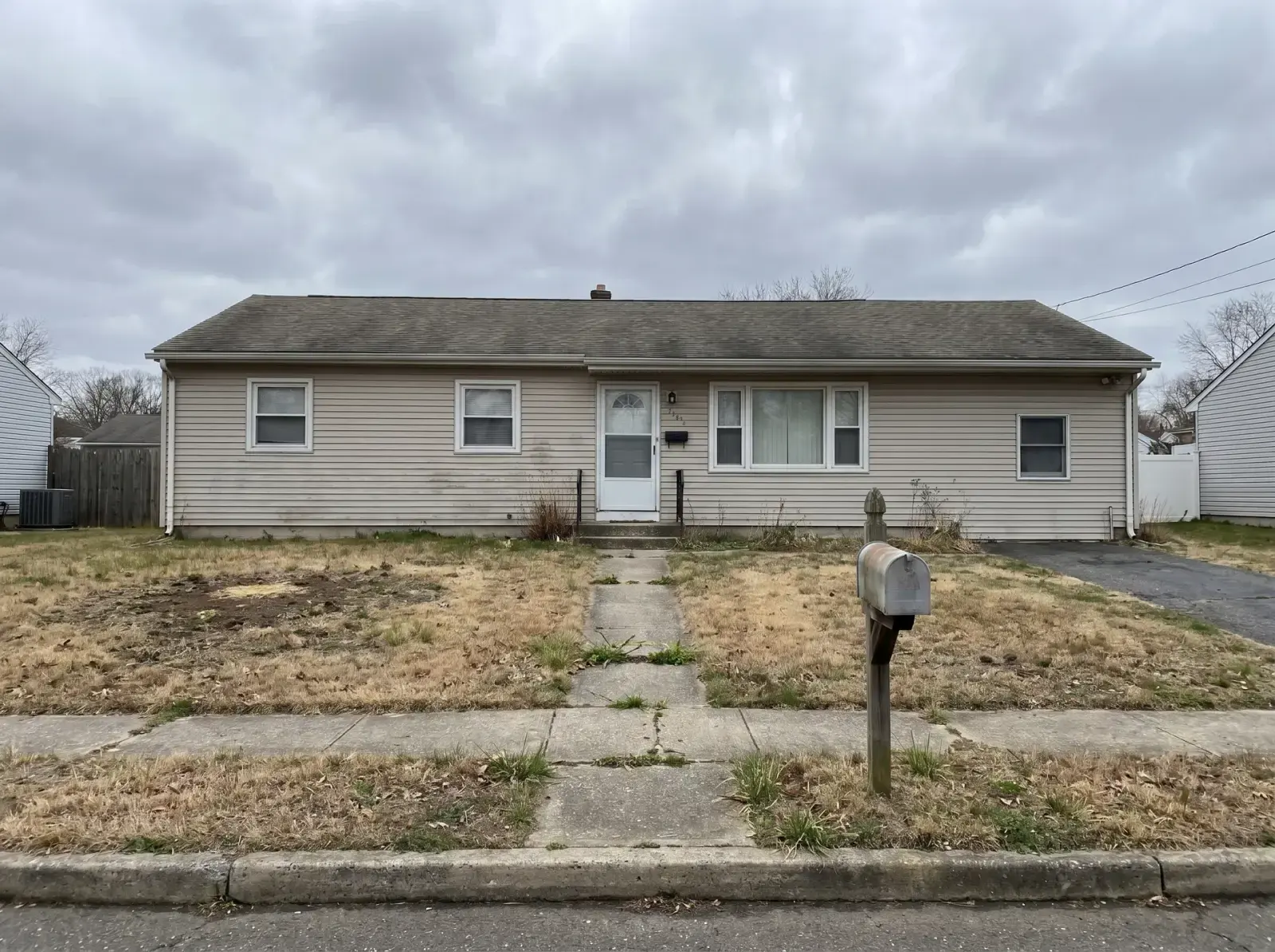
You've seen the billboards. "Does your lawn suck?" They promise weed treatments, fertilizer programs, and aeration services that will transform your ugly lawn into a golf course.
Here's what they don't tell you: if your lawn is already more than 40% weeds, dead spots, or bare dirt, no amount of chemical treatment is bringing it back. You're throwing money at a corpse.
We know this because we replace lawns every single week that homeowners spent $1,000+ trying to "treat" back to health. It never worked. It was never going to work. And now they're paying us to do what they should have done from the start — rip it out and start fresh.
The Lawn Treatment Promise vs. Reality
Lawn care companies sell you a program. Usually 5-7 applications per year. Fertilizer in spring. Weed control in summer. Aeration and overseeding in fall. Lime in winter. They'll tell you to be patient. "Give it a full season." "Results take time."
Here's what actually happens for lawns that are severely damaged:
Month 1-2: You see some green-up in the existing grass. The weeds also green up because fertilizer feeds everything.
Month 3-4: Weed control kills some broadleaf weeds. But crabgrass, nutsedge, and clover keep coming back because the lawn is too thin to crowd them out.
Month 5-6: The overseeding from fall either washes away, gets eaten by birds, or germinates and immediately dies because there's no topsoil for roots to establish in.
Month 7-12: You've spent $800-$1,200. Your lawn looks marginally better in some spots and exactly the same in others. The company tells you to "give it another year." You sign up again because you've already invested.
Month 13-24: You've now spent $1,600-$2,400 over two years. Your lawn is maybe 20% better than when you started. You're still embarrassed when the neighbors walk by. You're still avoiding having people over for barbecues.
This is the lawn treatment trap. It works great for lawns that are 80%+ healthy grass with a few weed patches. But for lawns that are fundamentally damaged? It's a money pit.
When Lawn Treatment Makes Sense (And When It Doesn't)
Let's be fair. Lawn treatment programs are legitimate services. They work well when:
- Your lawn is mostly grass (80%+) with scattered weeds
- You have good topsoil underneath (not pure sand or clay)
- Your soil pH is in the 6.0-7.0 range
- You have proper drainage and no major grading issues
- You're willing to wait 6-12 months for gradual improvement
Lawn treatment will NOT work when:
- Your lawn is more than 40% weeds, bare dirt, or dead grass
- You have NJ coastal sand or heavy clay with no organic matter
- Your soil pH is below 5.5 (common in Ocean County)
- You have grading issues causing pooling or dry spots
- The existing grass variety is wrong for your sun/shade conditions
- Previous landscapers laid sod on unprepared soil and it died
If you fall into the second category, you need a fresh start. Not a band-aid.
The Math: Treatment vs. Replacement
| Lawn Treatment (2 years) | Sod Replacement (5 days) | |
|---|---|---|
| Year 1 cost | $600-$1,000 (6 applications) | $4,500-$8,000 (one-time) |
| Year 2 cost | $600-$1,000 (6 more applications) | $0 — just water and mow |
| Time to results | 12-24 months (maybe) | 5 days (guaranteed) |
| Success rate on damaged lawns | ~40% | 99%+ |
| Includes soil prep | No | Yes — full amendment, lime, grading |
| Guarantee | None ("results vary") | 30-day establishment guarantee |
| If it fails, total cost | $1,200-$2,000 wasted + still need sod | N/A — it doesn't fail |
Let's say you have a medium-sized yard (3,000-4,000 sq ft). The treatment path costs $1,200-$2,000 over two years with a 40% chance of working on a severely damaged lawn. If it fails — and for badly damaged lawns, it usually does — you've wasted that money AND you still need sod.
The sod path costs $5,000-$7,000 once. It's done in 5 days. It's guaranteed. And you never pay another monthly treatment bill again.
Worst case scenario with treatment: You spend $2,000, it doesn't work, then you spend $6,000 on sod anyway. Total: $8,000 and two years of embarrassment.
Worst case scenario with sod: You spend $6,000 and have a perfect lawn in 5 days.
The math is obvious.
Why NJ Shore Lawns Are Especially Bad Candidates for Treatment
Ocean County have some of the worst soil in the state for growing grass. Here's why:
Sandy substrate. From Toms River to Point Pleasant to Brick, you're dealing with Lakehurst sand and coastal sand that has almost zero organic matter. Fertilizer washes straight through. Seeds can't establish roots. Even if weed treatments kill the weeds, there's nothing for new grass to grow in.
Acidic pH. Shore-area soil runs pH 4.5-5.5. Grass needs 6.0-6.5 to absorb nutrients. You can apply all the fertilizer you want — if the pH is wrong, the grass literally cannot use it. It's like pouring water into a cup with no bottom.
Salt exposure. Coastal properties deal with salt spray that damages grass blades and accumulates in soil over time. Treatment programs don't address salt damage.
Poor drainage patterns. Many Shore homes were built on filled lots with no proper grading. Water pools in some areas and drains too fast in others. No amount of fertilizer fixes a drainage problem.
This is why we see so many failed treatment programs on the Shore. The companies selling these programs know the soil conditions. They know treatment alone won't fix a severely damaged lawn on sandy, acidic soil. But they sell the program anyway because it's recurring revenue.
What Actually Fixes a Lawn That Sucks
If your lawn is beyond treatment, here's what a proper fix looks like:
1. Complete removal. Strip everything — dead grass, weeds, old roots, debris. Down to clean substrate.
2. Soil amendment. Work 2-4 inches of organic compost into the top 6 inches. This gives roots something to grab and hold moisture in sandy soil.
3. pH correction. Apply agricultural lime at rates specific to your soil test. On the Shore, this typically means 40-60 lbs per 1,000 sq ft.
4. Precision grading. Grade for proper drainage away from your foundation. Eliminate low spots that pool and high spots that dry out.
5. Fresh sod. Not from a big box store. Not from a pallet that's been sitting for three days. Cut fresh from a NJ farm the morning of install.
6. Professional installation. Tight seams, heavy rolling, starter fertilizer incorporated into the soil.
This process takes one day for most lawns. You water it, and roots start to grip in 10 to 14 days. We come back about 21 to 30 days after install for the first cut and the second fertilizer. After that, you mow it like normal. Done.
No monthly payments. No "give it another season." No hoping. Just a new lawn.
The Bottom Line
If your lawn sucks — really sucks, not just "has a few dandelions" — stop throwing money at treatments that won't work on severely damaged turf. The honest answer is that some lawns are beyond saving with chemicals alone.
The good news? Replacing it is faster, more reliable, and often cheaper in the long run than years of failed treatment programs.
Text us at (848) 301-1569 or get a free quote. We'll tell you honestly whether your lawn can be saved with treatment or whether it needs replacement. If treatment will work, we'll tell you that too — we're not going to sell you sod you don't need.
But if your lawn truly sucks? We can fix that in 5 days.
Ocean County Sod installs new lawns across Ocean County, NJ. Every installation includes full soil preparation, pH correction, precision grading, fresh-cut sod grown to the Sod Squad Standard, and 30 days of aftercare included. We serve Toms River, Brick, Point Pleasant, Jackson, Lakewood, Howell, Freehold, Wall Township, and all surrounding communities.