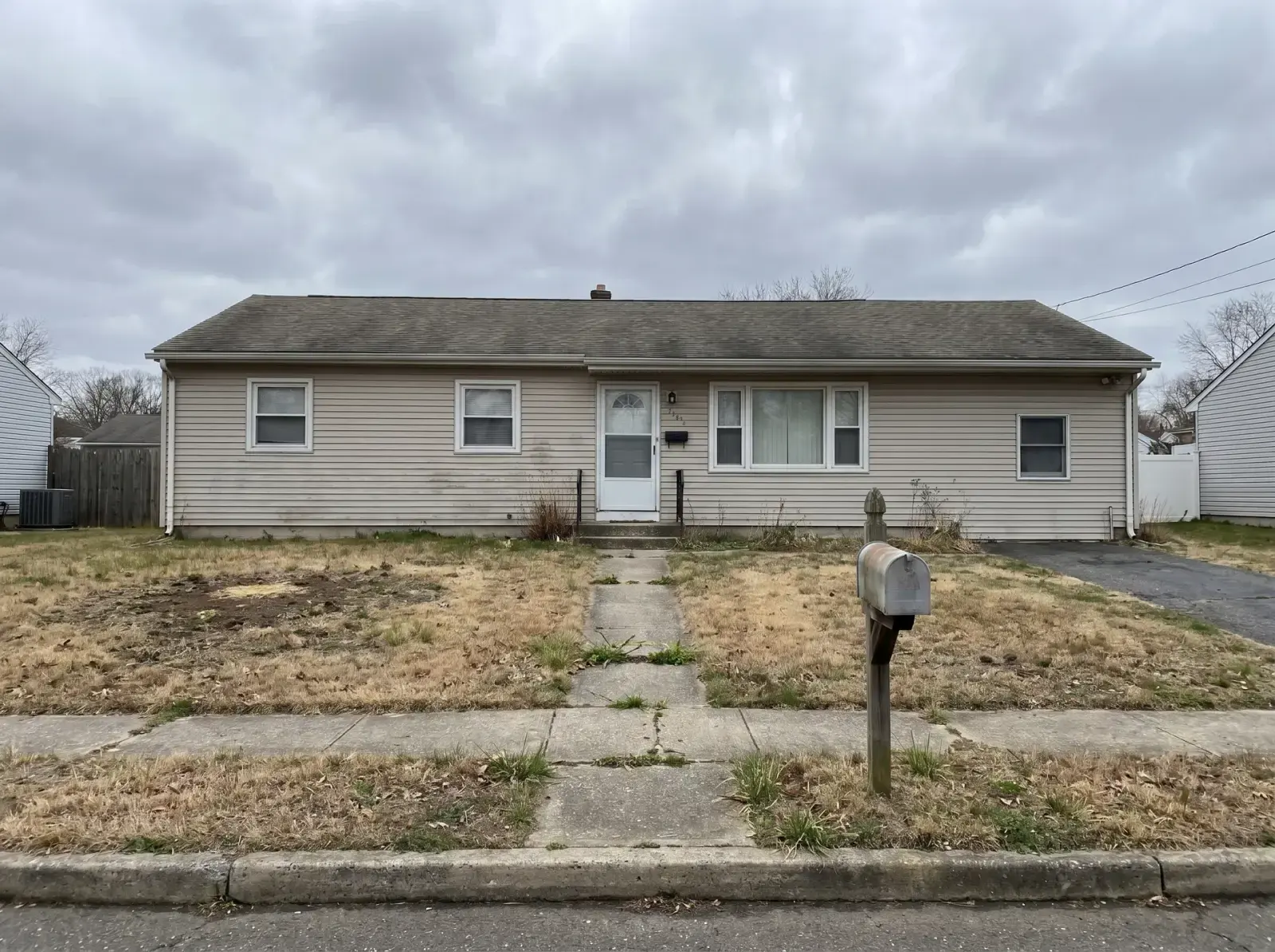
The #1 reason new sod fails in New Jersey is poor soil preparation. Not bad sod. Not wrong watering. Bad prep. If you skip this step or hire someone who cuts corners on it, your $5,000-$10,000 investment will be dead within a year.
We know this because we tear out failed sod installations every week. And 9 out of 10 times, when we pull up the dead sod, we find the same thing underneath: unprepared soil. No compost. No lime. No grading. Just sod thrown directly on top of whatever was there before.
Here's exactly what proper sod preparation looks like in New Jersey — whether you're DIYing it or hiring a pro.
Step 1: Remove Everything That's There Now
Before any soil work begins, the existing lawn (or weeds, or dirt) needs to be completely removed. This means:
- Strip all existing vegetation down to bare soil. Not just mowing it short — actually removing the root layer.
- Remove rocks, debris, and construction waste. Many NJ homes (especially newer builds) have construction debris buried just below the surface.
- Cut out any dead tree roots in the top 4-6 inches. These will create dead spots as they decompose.
- Mark all utilities. Call 811 before any digging. Irrigation lines, cable, gas — know where everything is.
How we do it: We use a sod cutter to strip the old lawn in rolls, then a skid steer to remove debris and get down to clean substrate. For smaller yards, this takes 2-3 hours. For larger properties, half a day.
Step 2: Test Your Soil
New Jersey has wildly different soil conditions depending on where you live:
Ocean County (Toms River, Brick, Lakewood, Jackson): Sandy soil with very low organic matter. pH typically 4.5-5.5. Drains too fast, doesn't hold nutrients.
Northern Monmouth County (Holmdel, Colts Neck, Marlboro): Heavy clay that compacts easily. pH 5.5-6.0. Holds too much water, poor drainage.
Coastal areas (Point Pleasant, Long Branch, Manasquan): Sandy with salt accumulation. pH varies. Salt damage is a factor.
Southern Monmouth/Northern Ocean (Howell, Wall, Freehold): Sandy loam — actually the best starting point. pH 5.5-6.0.
A basic soil test ($15-$30 at Rutgers Cooperative Extension) tells you:
- pH level (determines lime application rate)
- Organic matter percentage (determines compost needs)
- Nutrient levels (determines starter fertilizer blend)
Pro tip: Don't skip the soil test. The difference between 40 lbs of lime per 1,000 sq ft and 80 lbs per 1,000 sq ft is the difference between grass that thrives and grass that slowly yellows.
Step 3: Fix the Grade
Grading is the most overlooked step in sod preparation, and it's the one that causes the most long-term problems.
What proper grading means:
- Soil slopes AWAY from your foundation at a minimum 2% grade (1/4 inch per foot) for the first 10 feet
- No low spots that collect water (these become mud pits and kill sod roots)
- No high spots that dry out faster than surrounding areas
- Smooth, even surface without bumps or dips
Common grading problems in NJ:
- Homes built on filled lots where soil has settled unevenly over time
- Previous landscapers who just threw topsoil on top without grading
- Downspout discharge areas that have eroded channels
- Pool or patio installations that changed the natural drainage pattern
How we do it: We use a skid steer with a grading attachment for large areas and hand-rake for detail work around edges, gardens, and walkways. We check grade with a laser level to ensure proper slope.
Step 4: Amend the Soil
This is where the magic happens. Raw NJ soil — whether it's sand or clay — cannot support healthy grass long-term without amendment.
For sandy soil (most of Ocean County):
- Add 2-4 inches of organic compost (not topsoil — compost)
- Work it into the top 6 inches with a rototiller
- This gives roots something to grab and helps retain moisture
For clay soil (much of Monmouth County):
- Add 2-3 inches of compost plus coarse sand
- Work into the top 6 inches to break up clay and improve drainage
- May need to add gypsum to help clay particles separate
For all NJ soil:
- Apply agricultural lime at the rate determined by your soil test (typically 40-80 lbs per 1,000 sq ft on the Shore)
- Apply starter fertilizer (high phosphorus — something like 10-20-10)
- Work everything together so amendments are evenly distributed
Why compost, not topsoil? Topsoil is just dirt from somewhere else. It might be great, or it might be full of weed seeds and clay. Compost is decomposed organic matter — it's consistent, nutrient-rich, and improves any soil type.
Step 5: Final Grade and Compact
After amendments are worked in:
- Rake smooth — Remove any remaining rocks, roots, or clumps larger than a golf ball
- Set final grade — The finished soil surface should be about 2 inches below pavers, walks and driveways (and patios). This accounts for sod thickness.
- Light rolling — Use a half-filled lawn roller to lightly compact the soil. You want it firm enough that you don't sink in when walking, but not so compacted that roots can't penetrate.
- Water lightly — A light watering the day before sod installation helps settle the soil and reveals any remaining low spots.
Step 6: You're Ready for Sod
At this point, your soil should be:
- Smooth and evenly graded
- Amended with compost and lime
- Firm but not compacted
- Moist but not soggy
- Free of debris, rocks, and old roots
- About 2 inches below adjacent pavers, walks and driveways
Sod should be installed within 24 hours of delivery. Fresh-cut sod from a local NJ farm is ideal — it hasn't been sitting on a pallet losing moisture and going dormant.
Can You DIY Soil Preparation?
Yes, but understand what you're getting into:
DIY is realistic if:
- Your yard is under 2,000 sq ft
- The existing grade is already decent (no major slope issues)
- You have access to a rototiller (rent from Home Depot)
- You can get bulk compost delivered (1-2 cubic yards per 1,000 sq ft)
- You're physically able to spread and rake 2-4 tons of material
Hire a pro if:
- Your yard is over 2,000 sq ft (the labor becomes brutal)
- You have grading issues or drainage problems
- There's significant debris or old hardscape to remove
- You need the job done in a day (pros have equipment)
- You want a guarantee on the finished product
The Cost of Skipping Prep
We see this every single week: homeowners who paid $3,000-$5,000 for sod installation from a company that skipped soil prep. The sod looked great for 2-3 months. Then it started dying. Now they're paying us $6,000-$10,000 to rip it out and do it right.
Total cost of doing it wrong then right: $9,000-$15,000. Total cost of doing it right the first time: $5,000-$10,000.
Soil preparation isn't optional. It's not an upsell. It's the foundation that determines whether your new lawn lives or dies.
Ocean County Sod includes full soil preparation with every installation — soil testing, organic compost amendment, pH correction, precision grading, and professional installation. We serve all of Ocean County, NJ. Call (848) 301-1569 for a free quote.