The Shore Homeowner's Guide to a Year-Round Green Lawn in Point Pleasant, NJ
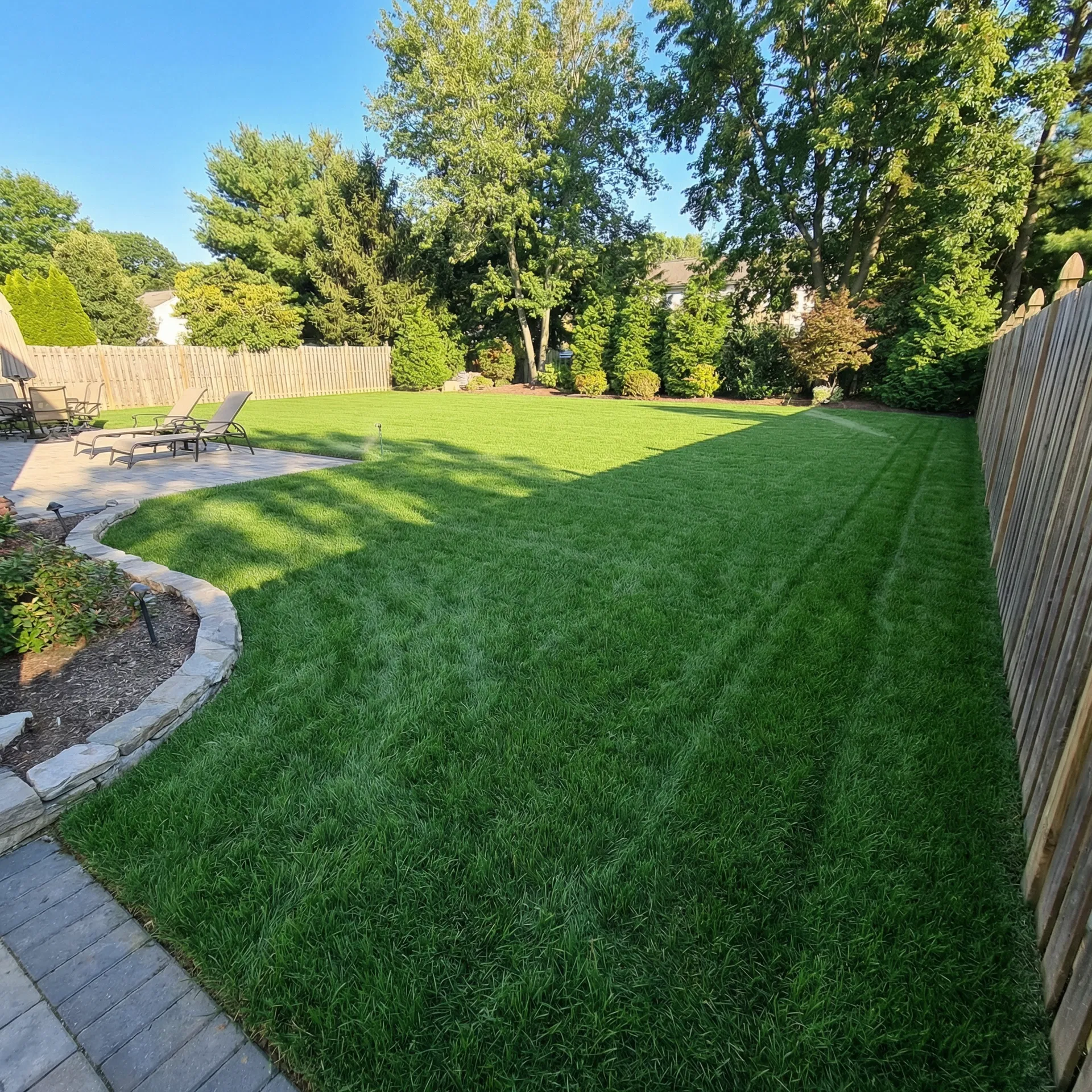
Living in Point Pleasant means you get the beach, the boardwalk, the Manasquan River, and some of the best summers on the East Coast. What you don't automatically get is a green lawn. The same ocean proximity that makes Point Pleasant one of New Jersey's most desirable communities also creates conditions that kill ordinary grass. Salt spray, sandy soil, coastal winds, and intense summer sun combine to turn lawns brown, patchy, and embarrassing — unless you know exactly how to fight back.
This guide is written specifically for Point Pleasant homeowners — from Point Pleasant Boro to Point Pleasant Beach, Bay Head Shores to Sunshine Harbor — who want a lawn that stays green from April through November and comes back strong every spring.
Why Point Pleasant Lawns Struggle (And What to Do About It)
Point Pleasant's lawn challenges are different from inland Ocean County towns like Jackson or Manchester. Understanding these challenges is the first step to solving them.
Salt Spray: The Invisible Lawn Killer
Every homeowner in Point Pleasant deals with salt to some degree, but the severity depends on your distance from the ocean and the Manasquan River.
Within 3 blocks of the beach (Point Pleasant Beach, Jenkinson's area): Your lawn receives direct salt spray during any onshore wind event. During nor'easters and winter storms, salt deposits can be heavy enough to see on grass blades. This salt pulls moisture out of grass cells through osmosis, causing the brown, crispy tips that shore homeowners know too well. It also accumulates in soil over time, raising sodium levels and disrupting nutrient uptake.
Point Pleasant Boro (inland neighborhoods): You're not immune. Salt aerosol travels further than most people realize — homes up to a mile from the ocean still receive measurable salt deposits during strong storms. The effect is less dramatic but cumulative. Over years, soil sodium levels creep up, and grass varieties that aren't salt-tolerant slowly decline.
Along the Manasquan River: Brackish water means salt exposure from a different direction. Properties along the river, particularly in the Riviera Beach area, face salt spray from the south and east. The river's tidal nature means salt levels fluctuate, creating inconsistent stress on grass.
The solution: Choose salt-tolerant sod varieties (Tall Fescue Blue is the best option for Point Pleasant), flush soil with fresh water after major storm events, and apply gypsum annually to help leach accumulated sodium from the root zone.
Sandy Soil: Fast Drainage, Zero Nutrition
Point Pleasant sits on coastal sand. Dig 6 inches into any yard in town and you'll hit pure sand with almost no organic matter. This creates two problems:
Water runs straight through. Sandy soil has almost no water-holding capacity. Rain or irrigation passes through the root zone in hours, not days. New sod needs consistent moisture for the first 2–3 weeks to establish roots, and in Point Pleasant's sandy soil, that means watering more frequently with less volume — 15 minutes three times a day rather than 45 minutes once a day.
Nutrients don't stick. Fertilizer applied to sandy soil leaches out quickly. The nitrogen, phosphorus, and potassium that grass needs wash down past the root zone with the next rain or watering. Point Pleasant lawns need more frequent, lighter fertilizer applications — every 6 weeks during the growing season instead of the standard 8-week interval used in areas with heavier soil.
The fix: Before any sod installation, amend the top 4–6 inches of soil with quality topsoil and organic matter. This creates a nutrient-holding layer that retains moisture and fertilizer long enough for grass roots to access them. It's the single most important step in a Point Pleasant lawn installation — skip it, and the sod will look great for 60 days then slowly decline.
Coastal Wind: The Stress Multiplier
Point Pleasant's ocean breezes feel great on a summer afternoon, but they're brutal on grass. Wind increases evapotranspiration — the rate at which grass loses moisture through its blades. On a hot, windy July day, a Point Pleasant lawn can lose twice as much moisture as the same lawn in sheltered inland Brick or Jackson.
This means Point Pleasant lawns need either more irrigation or a grass variety with lower water demands. Tall Fescue Blue's deep root system (6–8 inches vs. 2–3 inches for ryegrass) allows it to access moisture deeper in the soil profile, reducing its dependence on surface irrigation.
The Year-Round Green Lawn Calendar for Point Pleasant
Here's exactly what to do each month to keep your Point Pleasant lawn green from spring through fall and healthy through winter.
Spring (March – May)
March: Apply a pre-emergent crabgrass preventer by March 15th. Point Pleasant's coastal warmth means crabgrass germinates 1–2 weeks earlier than inland Ocean County. If you miss this window, you'll be fighting crabgrass all summer.
April: First fertilizer application of the season. Use a balanced slow-release formula (like 16-4-8) at half the bag rate. Point Pleasant's sandy soil can't handle full-rate applications — the excess washes through and ends up in groundwater. Start mowing at 3.5 inches. Never cut more than one-third of the blade height at once.
May: Second fertilizer application. Begin regular irrigation if rainfall drops below 1 inch per week. This is also the ideal month for sod installation in Point Pleasant — soil temperatures are consistently above 55°F, natural rainfall is reliable, and new sod has the entire summer to establish roots.
Summer (June – August)
June: Raise mowing height to 4 inches. Taller grass shades the soil, reducing moisture loss and suppressing weed germination. Apply a light fertilizer application (nitrogen only, like urea at half rate). Begin monitoring for brown patch fungus — Point Pleasant's humidity creates ideal conditions.
July – August: This is survival mode for Point Pleasant lawns. Water deeply (1 inch per week minimum) in the early morning. Never water in the evening — overnight moisture on grass blades promotes fungal disease. If your lawn shows signs of heat stress (blue-gray color, footprints that don't bounce back), increase watering frequency. Do NOT fertilize during heat waves — it forces growth the grass can't sustain.
After storms: If a nor'easter or tropical system brings salt spray, run your irrigation for 30 minutes within 24 hours to flush salt off grass blades and out of the top soil layer. This single step prevents more salt damage than any other treatment.
Fall (September – November)
September: Resume fertilization with a balanced formula. This is the most important feeding of the year — fall fertilizer fuels root growth that carries the lawn through winter. Apply at full rate; cooler temperatures and fall rain prevent the leaching issues that limit summer applications.
October: Final fertilizer application. Use a winterizer formula high in potassium (like 10-0-20) to harden grass for winter. Potassium strengthens cell walls, improving cold tolerance and disease resistance. Continue mowing at 3.5 inches until growth stops.
November: Final mow of the season at 3 inches — slightly shorter than summer height. This prevents snow mold and matting during winter. Clean up leaves promptly; wet leaf cover smothers grass and promotes fungal disease. This is also an excellent month for sod installation — cooler temperatures reduce stress on new sod, and fall/winter moisture establishes roots without intensive irrigation.
Winter (December – February)
December – February: Stay off the lawn when it's frozen or frost-covered. Foot traffic on frozen grass crushes cell walls and creates brown footprint patterns that don't recover until spring. If you notice salt spray deposits after winter storms, flush with irrigation on the next day above 40°F.
The Right Grass for Point Pleasant: Why Tall Fescue Blue Wins
After installing hundreds of lawns across Point Pleasant Boro and Point Pleasant Beach, one grass variety consistently outperforms everything else: Tall Fescue Blue.
Here's why it's the right choice for the Shore:
Salt tolerance. Tall Fescue Blue tolerates moderate salt exposure without the browning and dieback that destroys ryegrass and Kentucky Bluegrass in coastal environments. It's not immune to salt — no cool-season grass is — but it recovers faster and maintains color better than any alternative.
Deep roots. In Point Pleasant's sandy soil, root depth is everything. Tall Fescue Blue develops roots 6–8 inches deep, compared to 2–3 inches for perennial ryegrass. Those extra inches of root depth access moisture and nutrients that shallow-rooted grasses can't reach, reducing irrigation demands and improving drought survival.
Year-round color. Unlike ryegrass, which goes dormant brown in summer heat, and unlike zoysia, which browns out in winter, Tall Fescue Blue maintains green color from April through November in Point Pleasant's climate. It's the closest thing to year-round green you can get on the Jersey Shore without irrigation running 24/7.
Traffic tolerance. Point Pleasant is a family town. Kids, dogs, backyard barbecues, summer parties — your lawn takes a beating. Tall Fescue Blue's dense growth habit and strong crown structure handle foot traffic without developing the bare patches and ruts that plague finer-bladed grasses.
What Professional Sod Installation Costs in Point Pleasant
Sod installation pricing in Point Pleasant reflects the additional soil preparation that coastal properties require. Here's what homeowners are paying in 2026:
| Yard Size | Typical Cost Range | Notes |
|---|---|---|
| Small (under 1,000 sq ft) | $1,400 – $2,200 | Common for Point Pleasant Beach cottages |
| Medium (1,000 – 3,000 sq ft) | $2,200 – $6,000 | Most Point Pleasant Boro homes |
| Large (3,000 – 5,000 sq ft) | $6,000 – $10,000 | Larger Boro properties, corner lots |
| Extra Large (5,000+ sq ft) | $10,000+ | Custom quote required |
Point Pleasant installations typically cost 10–15% more than inland Ocean County towns because of the additional soil amendment required to counteract sandy, salt-affected soil. This isn't a markup — it's the difference between sod that lasts and sod that fails within a year.
Getting Started: Your Point Pleasant Lawn Replacement
If you're tired of looking at a brown, patchy lawn while your neighbor's looks like a golf course, it's time to stop guessing and start fresh.
Ocean County Sod specializes in Point Pleasant installations. We understand the salt, the sand, the wind, and the specific soil conditions in every neighborhood from Bay Head Shores to Riviera Beach. We stock premium Tall Fescue Blue year-round and offer same-day installation.
Call or text 848-301-1569 for a free on-site quote. We'll assess your soil, evaluate your salt exposure, and give you an honest recommendation — whether that's full sod replacement, partial renovation, or just better maintenance of what you have.
The Transformation
 BEFORE
Dead, patchy lawn — salt-damaged coastal soil, bare spots, weeds
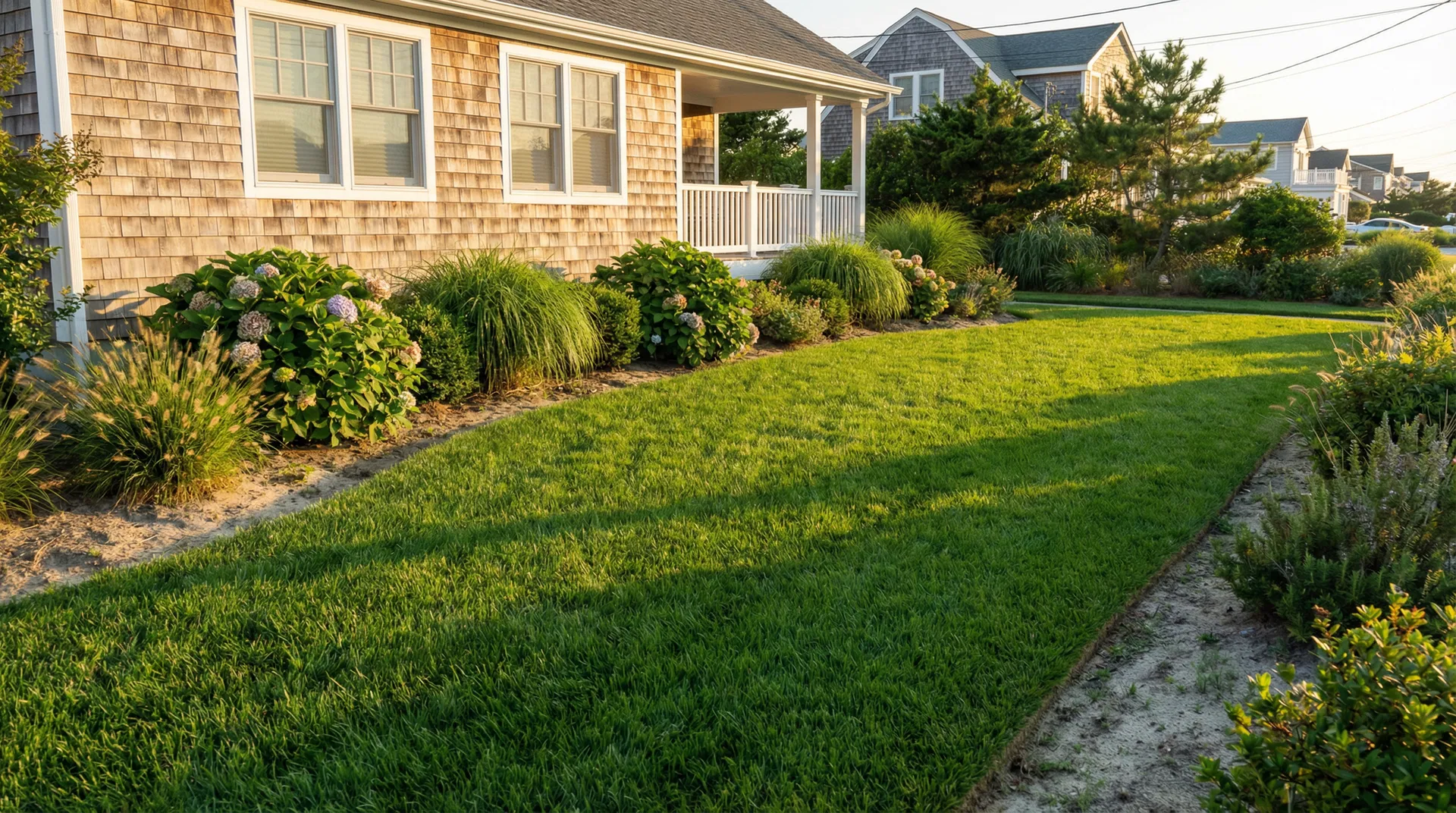 AFTER
AFTERLush Tall Fescue Blue — professionally installed by Ocean County Sod, Avon-by-the-Sea
Ready to Transform Your Lawn?
Get a free quote for your Ocean County property. Our team is ready to help you achieve the lawn of your dreams.
Sod Installation Near You
We serve homeowners across Ocean & Monmouth Counties. View our local sod installation pages:
Related Articles

Best Sod Installation Companies in Toms River, NJ (2026): Honest Reviews & Rankings
Looking for the best sod installation company in Toms River, NJ? We reviewed 8 local contractors — c...
Best Sod Installation Companies in Ocean County, NJ (2026): Honest Reviews & Rankings
Looking for the best sod installation company in Ocean County, NJ? We reviewed 8 local contractors —...